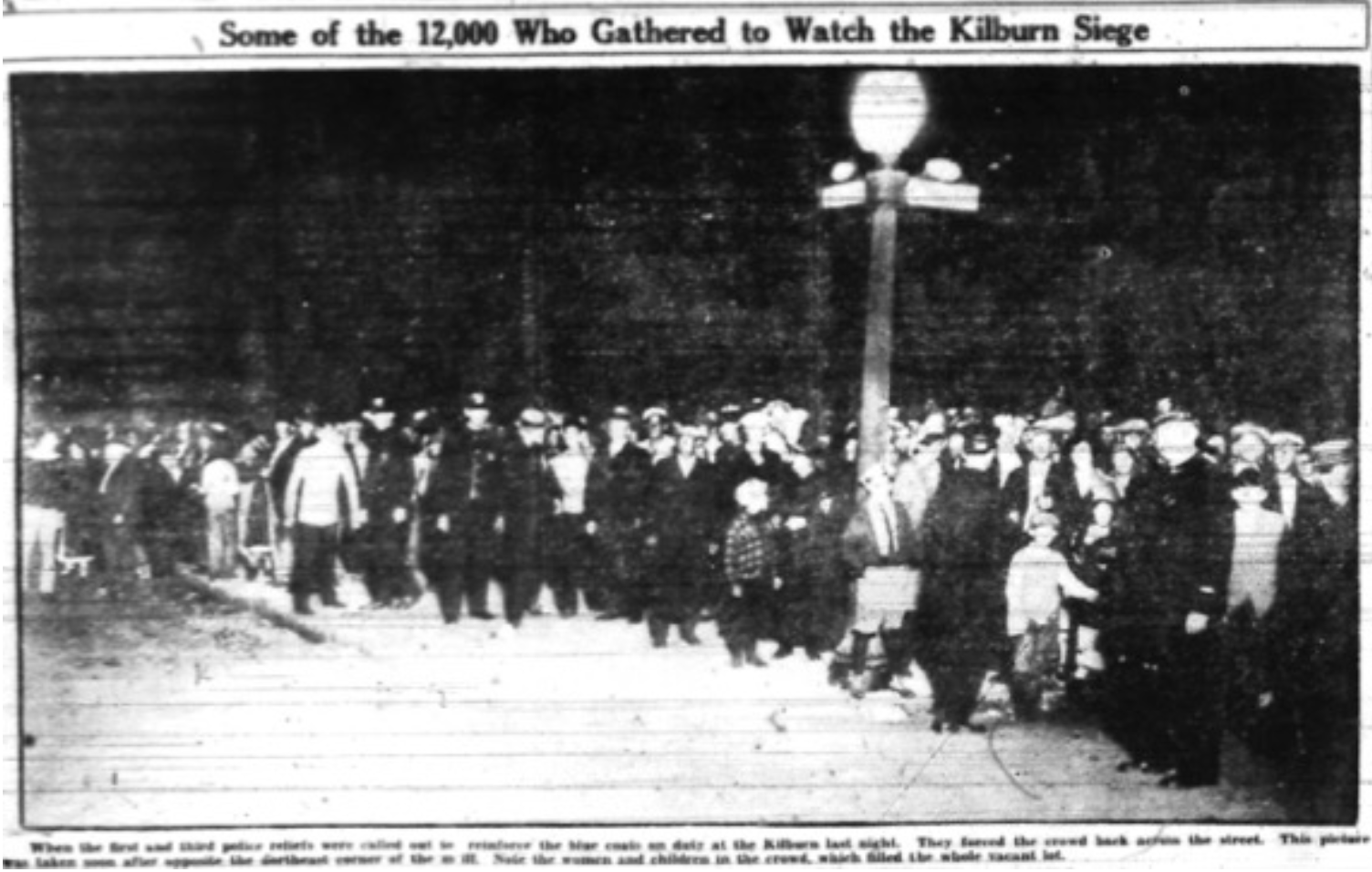
Kilburn Mill became the scene of one of the largest demonstrations of the 1928 strike when mill owners tried to reopen plants in July. On the night of July 10 and into the next morning, strikers and onlookers surrounded the mill, marched through the darkness, and watched the gates from both land and small boats offshore. The crowd was enormous, but the surviving newspapers did not agree on its size. The New Bedford Times used figures of 12,000 and 15,000 in adjacent coverage, while the Daily Worker later claimed that 18,000 people had joined the all-night picket.[1][2] What is not in doubt is the scale and duration of the action. Even the generally hostile Times described the crowd as orderly and in a "happy mood," despite a full police deployment and fears of violence. Kilburn showed the strike at its most public and physically powerful and both TMC and regular unionized workers contributed to the demonstration. After nearly three months without wages, thousands of people could still occupy the streets around a single mill and make an attempted reopening impossible to ignore. Later in July it became the site of numerous arrests, as New Bedford Police, National Guardsmen, and other assisting police forces crushed pickets. They justified this by proclaiming that only one picket could happen at each mill, and limiting the number of demonstrators allowed. With this pretext, they crushed peaceful demonstrations in the late summer up until the end of the strike.

wamsutta Mills- explain the photo here
Killburn Mill