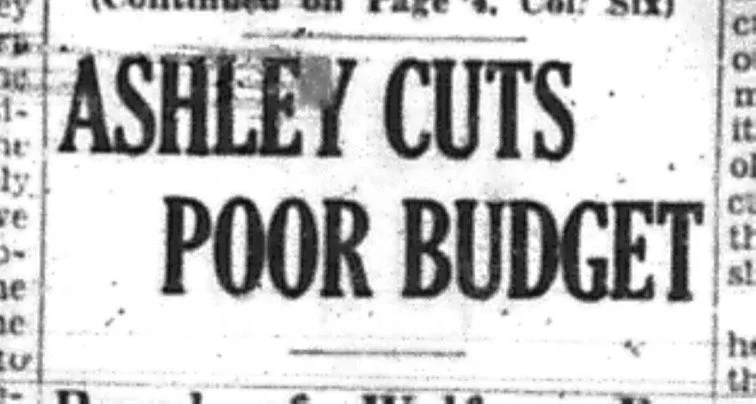
“Ashley Cuts Poor Budget.” New Bedford Times, August 9, 1928.
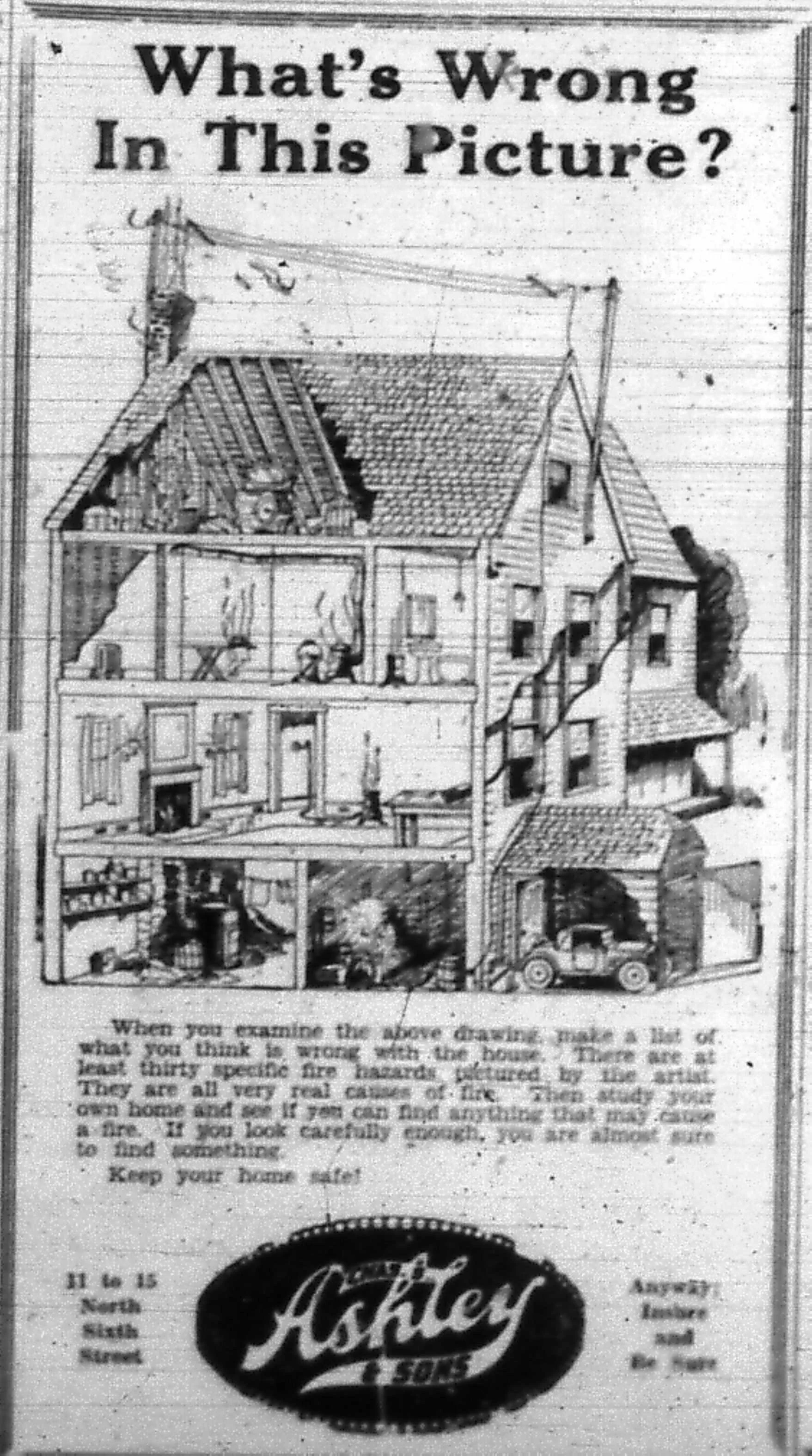
An advertisement for Mayor Ashley’s insurance firm, Chas. S. Ashley & Sons, Inc., in 1928. New Bedford Times, October 2, 1928.
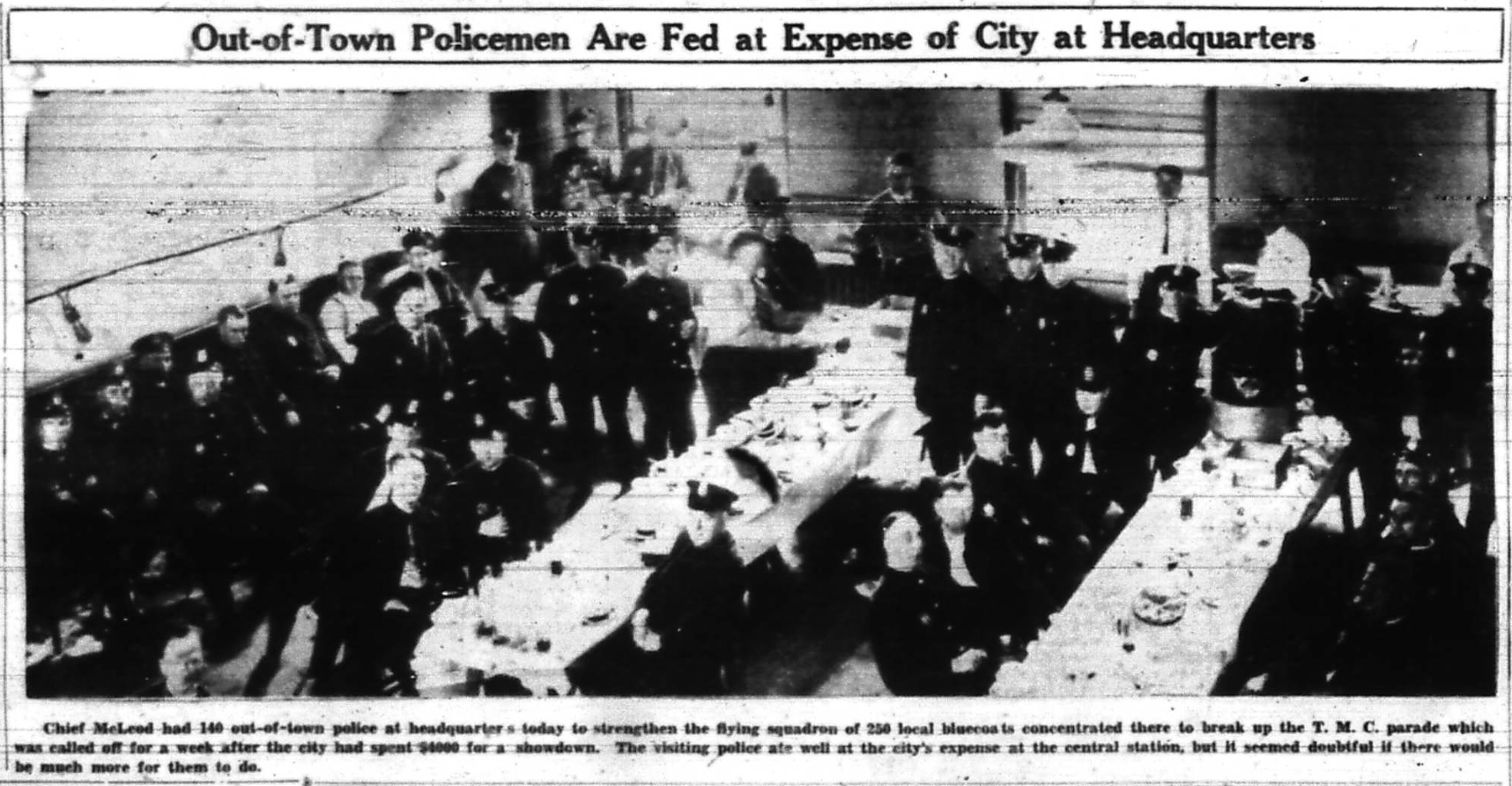
Original caption: “Out-of-Town Policemen Are Fed at Expense of City at Headquarters. Chief McLeod had 100 out-of-town police at headquarters today to strengthen the flying squadron of 250 local bluecoats concentrated there to break up the T.M.C. parade which was called off for a week after the city had spent $4000 for a showdown. The visiting police ate well at the city’s expense at the central station, but it seemed doubtful if there would be much more for them to do.” New Bedford Times, July 31, 1928.
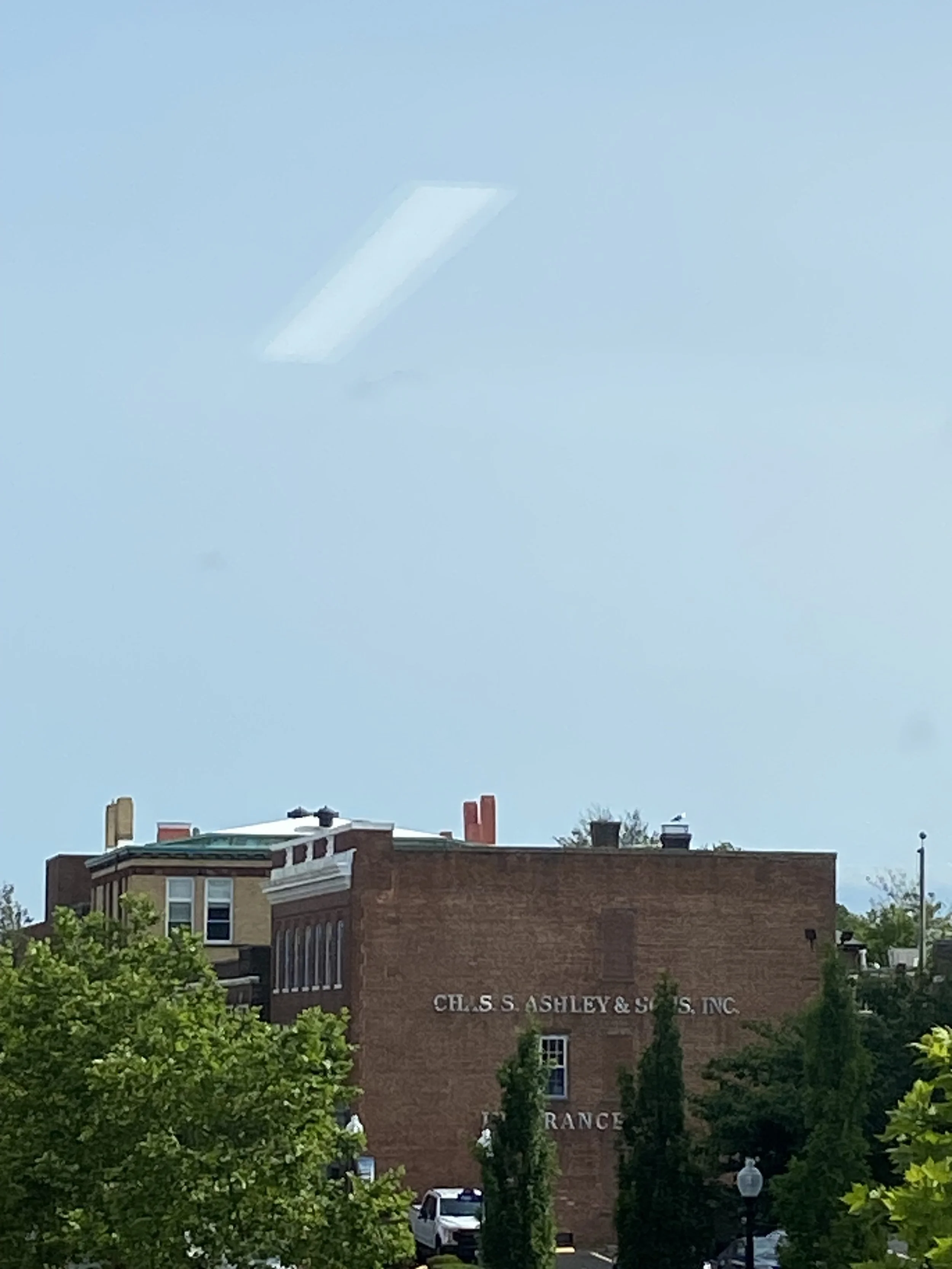
The Chas. S. Ashley & Sons sign, photographed from New Bedford’s Purchasing Department in 2023. This space was the Aldermen’s Chamber in 1928. The sign is also visible from the Licensing Department, one office over, which was the site of the confrontation between Mayor Ashley and Fred Beal.
New Bedford City Hall
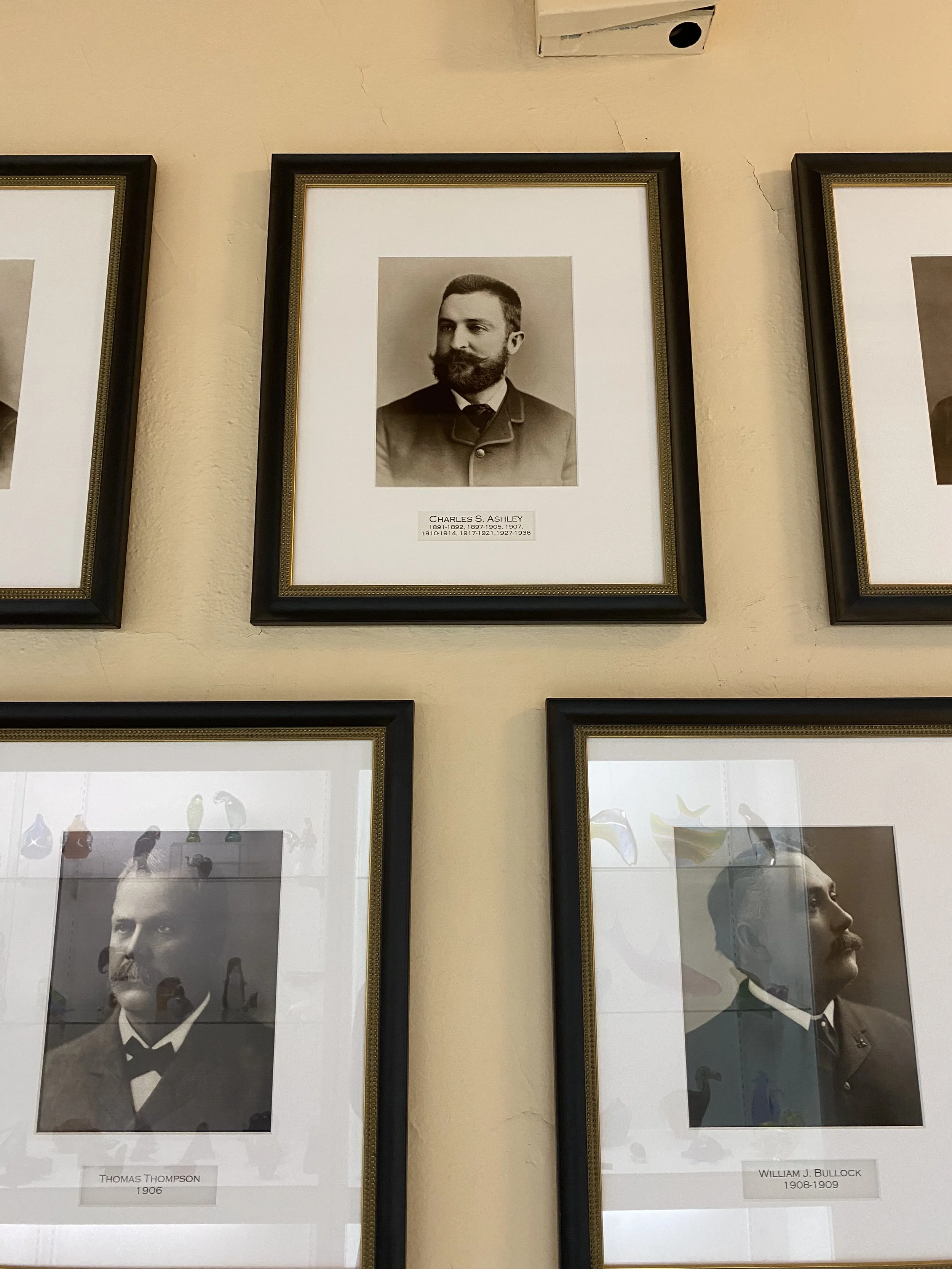
Mayor Ashley’s portrait in City Hall. Photograph taken in 2023.
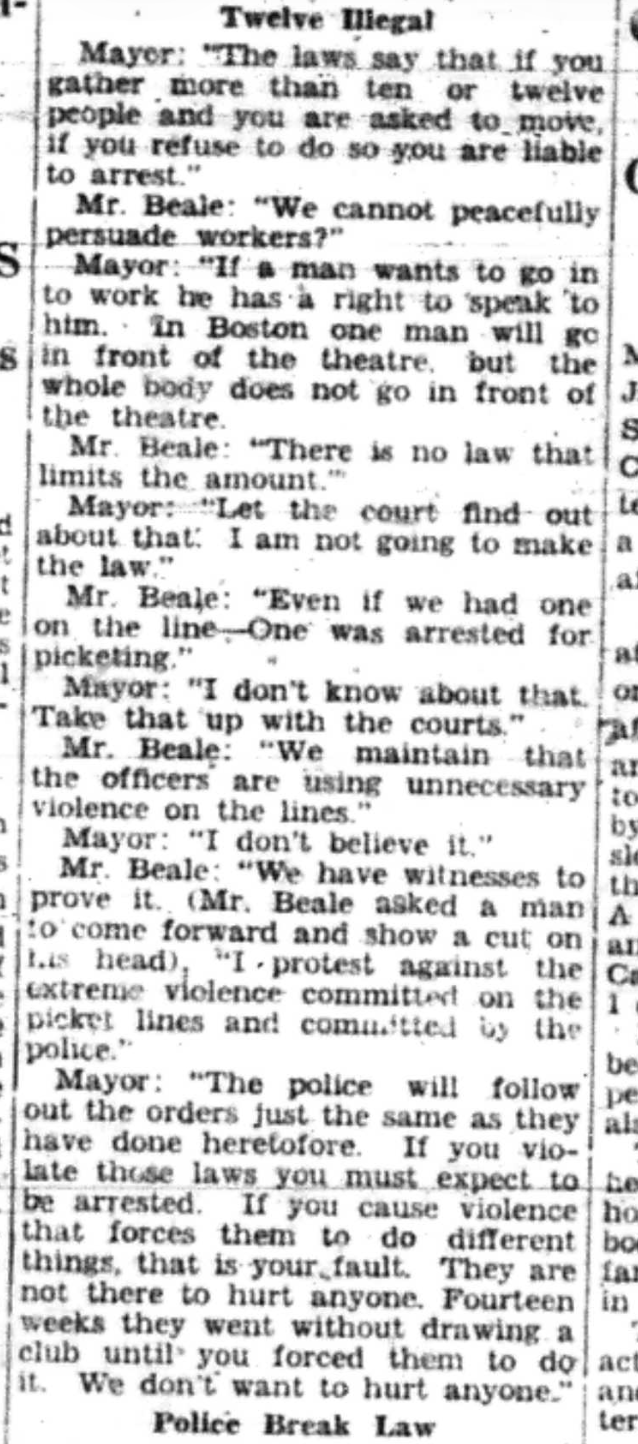
“The police will follow out the orders just the same as they have done heretofore. If you violate those laws you must expect to be arrested. If you cause violence that forces them to do different things, that is your fault. They are not there to hurt anyone. Fourteen weeks they went without drawing a club until you forced them to do it. We don’t want to hurt anyone.” Mayor Ashley, as quoted by the New Bedford Times, August 15, 1928.
New Bedford City Hall was not neutral ground during the 1928 Textile Strike. As the conflict moved into May, the city’s licensing apparatus became one of the ways officials restricted the Textile Mill Committee. The New Bedford Times reported that police closed a TMC hall as unlicensed even though, according to its own subhead, nobody in the gathering understood the English-language order to leave.[1] The Daily Worker answered with the claim that police could not evict organizers from a strike office, showing how the same confrontation was framed as public order in one newspaper and repression in the other.[2]
By midsummer, the pressure had expanded beyond meeting permits. In late July, Chief McLeod had 100 out-of-town officers at police headquarters to strengthen a force of 250 local officers concentrated there to break up a planned TMC parade; the visiting officers were fed at the city’s expense.[3] By August, that pressure had extended to survival. A New Bedford Times headline announced that Mayor Charles S. Ashley had cut the city’s poor-relief budget while the strike was still underway.[4] A confrontation between the mayor and Fred Beal took place in City Hall’s Licensing Department, where Ashley defended the tactics being used by police officers to break up the strike. Ashley had longstanding connections to the local textile firms. The sign for his insurance company is still visible today from a City Hall window, a physical reminder of the business connections that animated New Bedford politics.[5] Taken together, the licensing restrictions, extraordinary police mobilization, and reduction in poor relief show City Hall acting not as a neutral administrator, but as one of the institutions applying pressure to the TMC and the families sustaining the strike. Ashley’s insistence that strikers had “forced” police to draw their clubs made the city government’s position explicit.[6]